
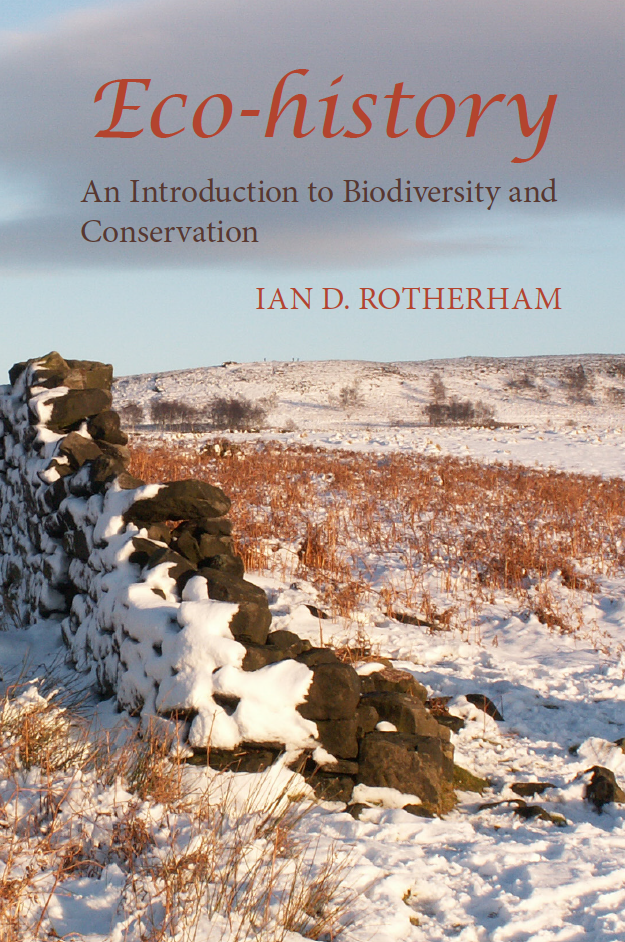
Eco-history: An Introduction to Biodiversity and Conservation
- Ian D. Rotherham (author)
| Title | Eco-history |
|---|---|
| Subtitle | An Introduction to Biodiversity and Conservation |
| Contributor | Ian D. Rotherham (author) |
| Landing page | https://www.whpress.co.uk/publications/2014/06/01/eco-history/ |
| Copyright | The White Horse Press |
| Publisher | The White Horse Press |
| Publication place | Winwick, UK |
| Published on | 2014-06-01 |
| ISBN | 978-1-874267-81-2 (Paperback) |
| 978-1-874267-82-9 (PDF) | |
| Short abstract | The book introduces the background to humanity’s interactions with Nature and the forces at work in shaping today’s world. Key issues are addressed in short, focused chapters, supported by a detailed thousand-year timeline based on the British Isles. It is essential reading for anyone wishing to understand the nature of the global environmental crisis and how we got here. In particular, it will be a stimulating guide to students and teachers or lecturers from sixth form and college to university. |
| Long abstract | Rotherham is convinced that to conserve wildlife or ecology, and to heal the wounds of human impacts, we must understand our own history and how, over countless centuries, we have forged today’s ecologies from our impacts on, and utilisation of, nature. He argues that the interlinked concepts of biodiversity, nature conservation and of sustainability are too often mixed with notions of ‘wilderness’ and ‘nature’ and ‘naturalness’. Much of the biodiversity that we hope to conserve is the result of long-term interactions between people and nature. It is a ‘cultural ecology’, the product of the environment, history and tradition. Recognising that the landscapes around us are ‘eco-cultural’ not ‘natural’ is, Rotherham suggests, the key to understanding contemporary biodiversity and major challenges for ideas of future conservation and sustainability. The book introduces the background to humanity’s interactions with Nature and the forces at work in shaping today’s world. Key issues are addressed in short, focused chapters, supported by a detailed thousand-year timeline based on the British Isles. It is essential reading for anyone wishing to understand the nature of the global environmental crisis and how we got here. In particular, it will be a stimulating guide to students and teachers or lecturers from sixth form and college to university. It will also appeal to the ordinary wildlife enthusiast wishing understand the past, and to gain insight into what might be in store for the future. |
| Print length | 266 pages |
| Language | English (Original) |
| Dimensions | 160 x 229 mm | 6.3" x 9.02" (Paperback) |
| Media | 66 illustrations |
| 6 tables | |
| BIC |
|
| BISAC |
|
| Keywords |
|
Contributors
Ian D. Rotherham
(author)Ian Rotherham is Professor of Environmental Geography and Reader in Tourism and Environmental Change at Sheffield Hallam University, and a Distinguished International Visiting Scholar at the National Sun-yat Sen University in Taiwan. He has written over 400 papers and articles and a number of books. His research includes landscape history, the economics of landscape change, issues of invasive alien species, urban ecology and aspects of tourism and economic development. Ian works extensively with the popular media and with grassroots conservation groups. He chairs a number of national and international committees and working groups and his work informs the development of relevant policies and strategies. He has acted as an advisor to a number of governments internationally.