
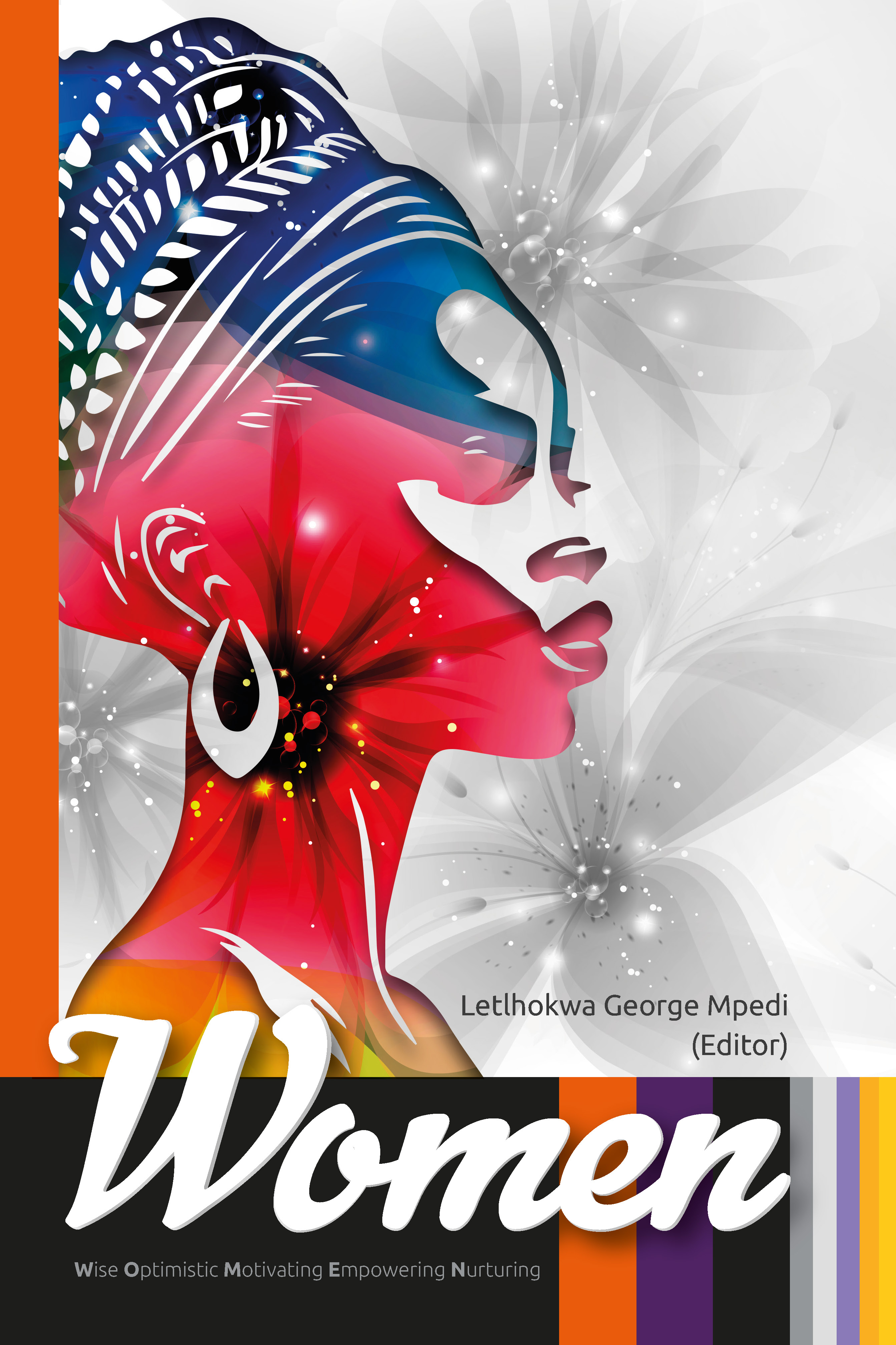
Women: Wise, Optimistic, Motivating, Empowering & Nurturing
- Letlhokwa George Mpedi(editor)
- Phumzile Mlambo-Ngcuka(author)
- N’Dri Thérèse Assié-Lumumba(author)
- Thebe Ikalafeng (author)
- Maria Frahm-Arp(author)
- Zeblon Vilakazi (author)
- Nonkululeko Gobodo (author)
- Tshilidzi Marwala(author)
- Tinyiko Maluleke(author)
- Randall Carolissen (author)
- Alistair Mokoena(author)
- Mike Teke (author)
- Lebogang Seale (author)
- Nolitha Vukuza (author)
- Refilwe Nancy Phaswana-Mafuya(author)
- Sibongile Vilakazi (author)
| Title | Women: Wise, Optimistic, Motivating, Empowering & Nurturing |
|---|---|
| Contributor | Letlhokwa George Mpedi(editor) |
| DOI | https://doi.org/10.36615/9781776489442 |
| Landing page | https://ujonlinepress.uj.ac.za/index.php/ujp/catalog/book/332 |
| License | https://creativecommons.org/licenses/by-nc/4.0 |
| Copyright | Letlhokwa George Mpedi; Phumzile Mlambo-Ngcuka, N’Dri Thérèse Assié-Lumumba, Thebe Ikalafeng, Maria Frahm-Arp, Zeblon Vilakazi, Nonkululeko Gobodo , Tshilidzi Marwala, Tinyiko Maluleke, Randall Carolissen, Alistair Mokoena, Mike Teke, Lebogang Seale, Nolitha Vukuza, Refilwe Nancy Phaswana-Mafuya, Sibongile Vilakazi |
| Publisher | UJ Press |
| Published on | 2024-08-05 |
| ISBN | 978-1-7764894-3-5 (Paperback) |
| 978-1-7764894-4-2 (PDF) | |
| 978-1-7764894-6-6 (XML) | |
| 978-1-7764894-5-9 (EPUB) | |
| Short abstract | Women’s Day, celebrated annually on the 9th of August, commemorates the 1956 women’s march against the discriminatory pass laws during the apartheid era. |
| Long abstract | Women’s Day, celebrated annually on the 9th of August, commemorates the 1956 women’s march against the discriminatory pass laws during the apartheid era. It was on this day that women from across the nation were led by Helen Joseph, Lillian Ngoyi, Rahima Moosa and Sophia Williams-De Bruyn to the Union Buildings to protest against the oppressive pass laws. As SA History describes it, “The 1956 Women’s March played a vital role in women becoming more visible participants in the anti-apartheid struggle.” That is not to say that women were not already playing an instrumental role in the struggle. But as history has long demonstrated, this is often a forgotten aspect of our narrative. This unfortunate omission underscores the importance of reclaiming and preserving these stories, weaving them into the broader narrative of societal progress. As we reflect on their fight and the impact of their war cry, “wathint’ abafazi, wathint’ imbokodo, uza kufa” which translates to “when you strike the women, you strike a rock, you will be crushed you will die”, we are given pause to reflect on the progress made in the fight for equality since then. We now live in a democratic society where many of our aspirations have been realised. Yet, there is much we have not managed to achieve. To say that South Africa has achieved equality would be a fallacy. A grim reality is that in many aspects we have failed women. Pay parity, underrepresentation in industries, unequal access to opportunities, disturbing levels of violence, sexism and misogyny persist unabated. These issues cast a long shadow over our aspirations as a nation. This book aims to shed light on these issues while honouring the progress made and highlighting the road ahead. The paperbacks are available directly from UJ Press at R200. Office 311 APK Library, ujpress@uj.ac.za or 011 559 2891. |
| Print length | 198 pages |
| Language | English (Original) |
| Dimensions | 152 x 11 x 228 mm | 5.98" x 0.43" x 8.98" (Paperback) |
| THEMA |
|
| BISAC |
|
| Keywords |
|